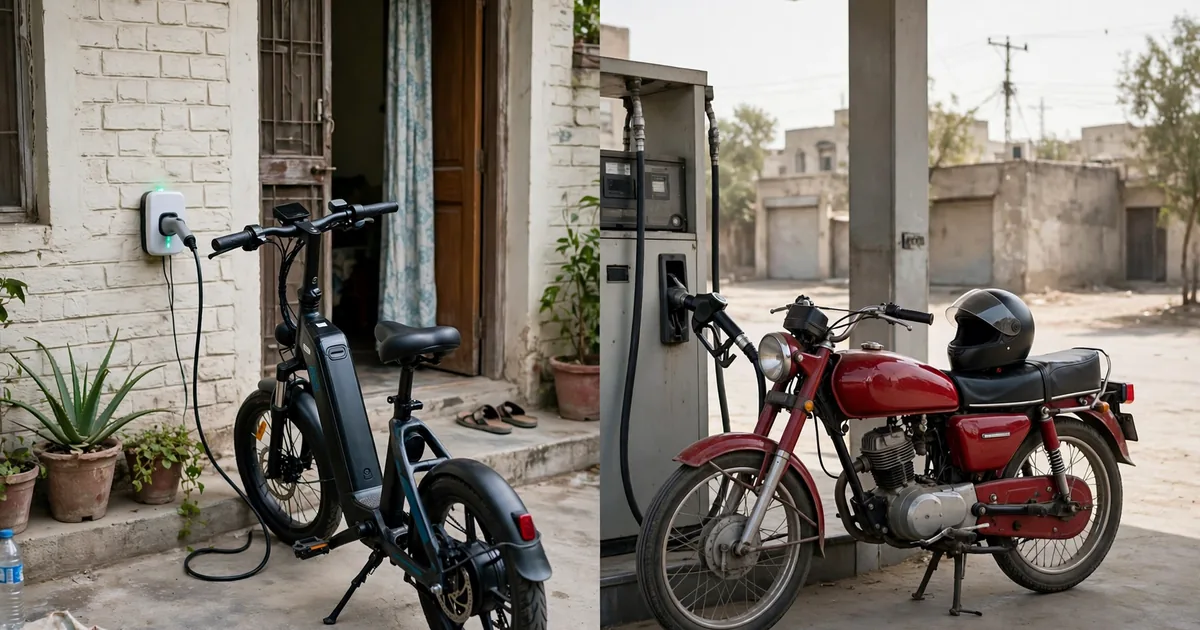
The e bike vs petrol bike cost question is the first thing most Pakistani riders ask, and it deserves a real answer with real arithmetic — not slogans. An e-bike is dramatically cheaper to run per kilometre, but it costs money in different places: charging instead of petrol, a battery that will one day need replacement instead of engine work. This comparison lays out a worked monthly example for a typical commuter so you can replace the example figures with your own and see what you would actually save.
All prices below are examples for illustration at the time of writing. Petrol prices, electricity tariffs and parts prices change frequently in Pakistan — check the current petrol price and your latest electricity bill before making a final decision.
The Worked Example: A Typical 1,000 km Month
Take a common case: a student or office worker riding about 40 km a day, roughly 1,000 km a month, mostly in city traffic. On a common 70cc–110cc petrol bike that returns around 45–55 km per litre in real city use, that month needs roughly 18–22 litres of petrol. At an example price of around Rs 260–285 per litre, the fuel bill lands somewhere around Rs 5,000–6,000 for the month.
A typical commuter e-bike uses roughly 2–3 units of electricity for a full charge that covers about 60–80 km, which works out to roughly 30–45 units for 1,000 km. At an example household rate of around Rs 45–65 per unit depending on your slab and city, home charging costs roughly Rs 1,500–2,700 for the same month. Your exact rate depends on your total household consumption slab, so read your own bill — but even at the higher end, the e-bike’s running cost is usually less than half of petrol, and often closer to a third.
E Bike vs Petrol Bike Cost: The Full Monthly Table
| Monthly cost (example) | Petrol bike (70–110cc) | E-bike (commuter class) |
|---|---|---|
| Fuel / charging for ~1,000 km | Rs 5,000–6,000 petrol | Rs 1,500–2,700 electricity |
| Engine oil | Rs 700–1,000 (monthly change) | None |
| Routine maintenance share | Tuning, filters, plugs: Rs 500–1,000 | Brakes/tyres only: Rs 300–600 |
| Chain, cables, misc. | Rs 300–500 | Rs 200–400 |
| Typical monthly total | Rs 6,500–8,500 | Rs 2,000–3,700 |
| Typical yearly total | Rs 78,000–102,000 | Rs 24,000–44,000 |
The gap — often Rs 4,000–5,000 a month in this example — is why scheme installments feel manageable for many families: the fuel saving alone can cover a large part of a monthly installment. You can test this against a financed offer on the Bank of Punjab E-Bike Scheme page.
The Honest Counterweight: Battery Replacement
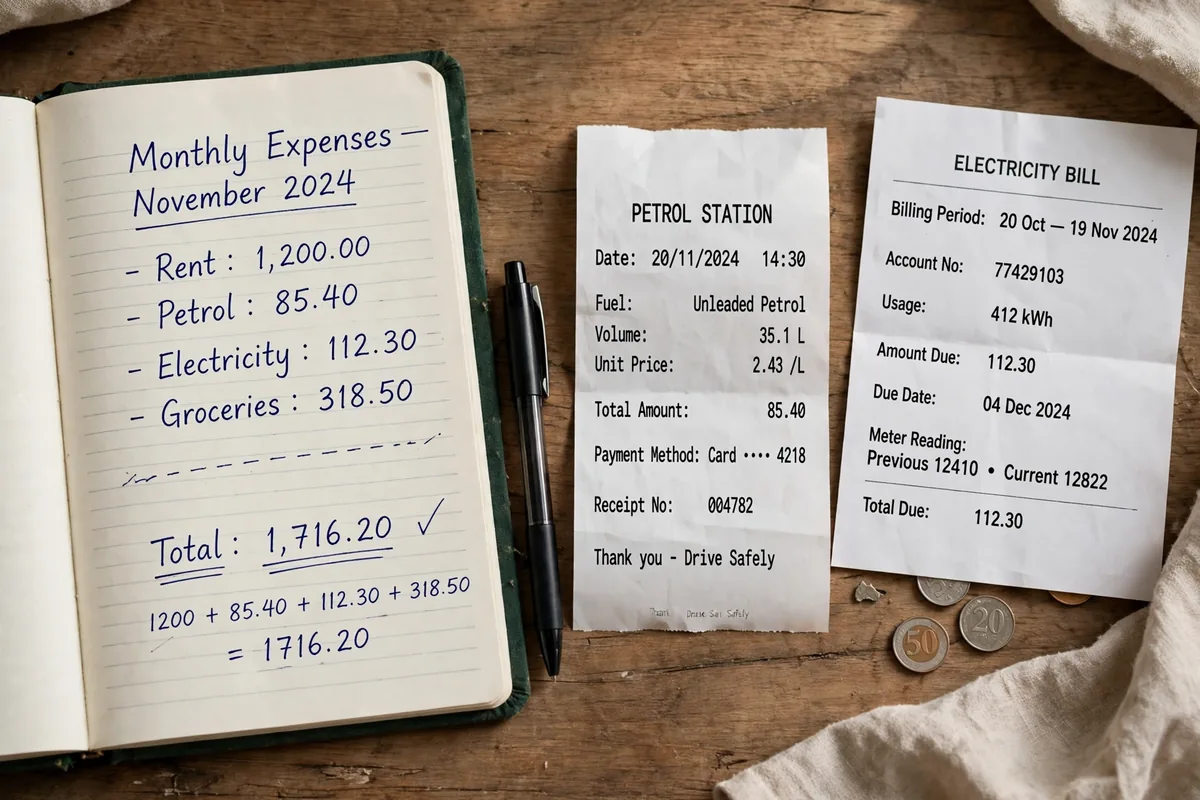
A fair comparison must include the e-bike’s one big future expense: the battery. A lithium battery in a commuter e-bike typically serves several years of daily use before its range drops noticeably, and a replacement can cost a significant five-figure sum depending on size and brand — ask the seller for the current replacement price of your exact model before buying, not after. Lead-acid batteries are cheaper to replace but usually need it sooner.
Even after setting aside a monthly amount for that future battery — say Rs 800–1,200 a month in a savings pot — most daily riders in the example above still come out ahead of petrol. A petrol bike, meanwhile, has its own slow expenses e-bike owners skip entirely: engine oil every month, air filters, spark plugs, clutch plates, and eventually engine work on a hard-used bike.
Costs That Are the Same on Both
Not everything changes when you switch. Both bikes need tyres, brake parts, registration and token or tax renewals where your province applies them, a helmet, and occasional repairs after a fall. Insurance, if you choose it, is available for both. Petrol prices are announced by the government and tracked by OGRA, so you can update the petrol side of your own comparison in minutes whenever prices change.
Where a petrol bike still wins on cost
Honesty matters: if you ride very little — a few kilometres a week — the e-bike’s purchase price takes far longer to pay back, and a cheap used petrol bike can be the softer hit on your pocket today. E-bikes reward daily, regular riding. The more kilometres you do each month, the faster the saving grows; occasional riders save the least.
Purchase Price and Resale
New commuter e-bikes and new 70cc petrol bikes now sit in broadly overlapping price bands in Pakistan, though exact prices vary by brand and month — treat any price quoted here or on social media as an example and confirm the current showroom price. Government schemes change the calculation entirely for eligible students and teachers by spreading the price into installments, sometimes with a subsidy share; check your eligibility routes starting from the main E Bike Scheme page. Resale values of e-bikes are still developing as the market grows, and a bike with a healthy, honestly-described battery sells far better than one with hidden battery wear.
FAQs
How much can I realistically save per month with an e-bike?
For a rider covering about 1,000 km a month, example savings commonly land around Rs 4,000–5,000 monthly after running costs, before counting a battery savings allowance. Your figure depends on your petrol bike’s average and your electricity slab.
Does home charging push my electricity bill into a higher slab?
It can, if your household is near a slab boundary. An e-bike adds roughly 30–45 units a month for a daily rider; check your bill’s slab structure to price those units correctly.
Is an e-bike cheaper even if I include battery replacement?
For daily riders, usually yes. Spread a battery replacement over its years of service and the monthly allowance is still typically smaller than the petrol and oil costs it replaces. Low-mileage riders benefit least.
Which is cheaper to maintain: e-bike or petrol bike?
The e-bike, clearly. There is no engine oil, filter, plug or tuning cycle. Its routine care is tyres, brakes and keeping connectors clean — plus battery care habits.
Do schemes make the e-bike cheaper than buying cash?
For eligible applicants, installments plus any subsidy share can make a scheme bike cheaper overall than a cash purchase of a similar petrol bike, especially when you add the monthly fuel saving. Compare the scheme’s total payable figure carefully before signing.
Conclusion
On running cost, the e bike vs petrol bike cost contest is not close for a daily Pakistani commuter: electricity, zero oil and minimal maintenance typically halve or better the monthly bill, even after honestly allowing for a future battery. Do the maths with your own kilometres, your own electricity slab and current petrol prices — and if the numbers fit, a scheme or showroom e-bike will pay you back a little more every single month.