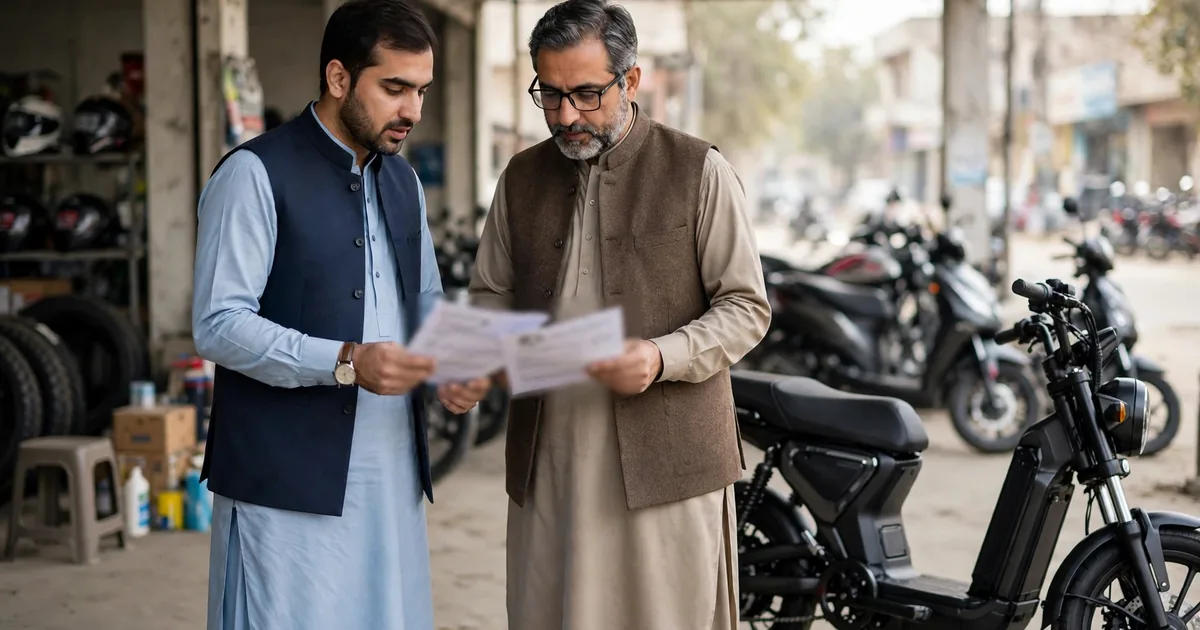
Many owners ask about the rules to sell or transfer scheme e bike units within months of receiving one. It feels like your property — the bike is in your name, parked at your home — but a government scheme bike is not the same as a bike you bought outright with your own money. Subsidy conditions and, in financed schemes, the bank’s claim on the bike both restrict what you can do with it, especially in the early period.
This guide explains the usual restrictions, when a transfer may become possible, and the risks of informal selling.
Please note: ebikescheme.online is an independent informational website, not a government or legal website. The binding conditions are in the documents you signed; read those, and confirm with the department or bank before any transfer.
Why Sell or Transfer Scheme E Bike Deals Are Restricted
Scheme bikes are given for a purpose: to help a specific student, teacher or applicant travel. The subsidy — and in financed phases the government’s share of the cost — is attached to you, not to the bike as a market commodity. If bikes could be sold freely on day one, applicants would apply only to resell at a profit, the target group would not benefit, and the scheme’s public money would leak into the open market.
That is why scheme terms usually include a lock-in condition, and why a bank-financed bike also cannot be freely sold while its installments are unpaid: until the dues are cleared, the financing bank normally holds a claim recorded against the vehicle.
Two separate restrictions, not one
- Scheme restriction: the department’s conditions, which may ban transfer for a set period or altogether without permission.
- Bank restriction: while installments remain, the bike is effectively security for the financing; selling it without clearing or formally transferring the loan breaks the financing agreement.
What the Rules Usually Say
Exact wording differs by phase and is written in the undertaking or agreement you signed, but the pattern most owners face is:
| Situation | Usual position | What to check |
|---|---|---|
| Selling during the lock-in period | Not allowed under scheme conditions | The lock-in clause in your signed undertaking |
| Selling while installments are unpaid | Not allowed without the bank’s written process | Your financing agreement and the bank’s transfer policy |
| Selling after dues cleared and lock-in over | May be allowed like a normal used bike | Confirm no other scheme condition still applies |
| Transfer to a family member | Sometimes possible with department/bank approval | Whether a formal transfer category exists in your scheme |
| Bike stolen or written off | Must be reported; insurance/FIR process applies | Inform the bank and department promptly |
The registration and ownership side of any vehicle transfer in Pakistan runs through the provincial excise system; for Punjab vehicles the Excise and Taxation Department’s services are described at excise.punjab.gov.pk. A scheme bike still has to pass through that system — but excise transfer alone does not remove scheme or bank conditions.
The Risks of Selling Informally
Some owners hand over the bike against a stamp paper or a simple agreement, keeping it registered in their own name. This is the most dangerous route of all:
- The bike stays legally yours, so fines, accidents and misuse by the buyer remain connected to you.
- The bank can still recover unpaid installments from you, because the loan is in your name.
- If the department discovers a banned transfer, your benefit can be cancelled and recovery proceedings may follow, besides harming your record for future schemes.
- The buyer also has weak protection, so such deals often end in disputes that satisfy nobody.
If You Genuinely Need to Sell or Transfer
- Read your documents first: find the transfer and lock-in clauses in the undertaking and financing agreement you signed at delivery.
- Ask in writing: put the question to the scheme department or your institute, and to the financing bank if installments remain. The bank’s general information is at bop.com.pk for Bank of Punjab financed phases.
- Clear or formally transfer dues: if a route exists, it normally requires the loan to be settled or officially transferred to the buyer with the bank’s approval.
- Complete the excise transfer properly so the registration actually changes, and keep copies of every approval and receipt.
If your reason is financial difficulty with installments, talk to the bank early instead of quietly selling the bike. Banks and departments both prefer a documented solution over a default followed by a banned sale.
Before you even reach that stage, it helps to understand the deal you accepted at selection: the scheme overview on this site’s E Bike Scheme hub summarises the conditions attached to these bikes, and your current status and obligations can be reviewed through the process described on the Check Status page. Many owners only discover the lock-in after a buyer is already standing in front of them; reading your conditions early, while no one is pressuring you, leads to far better decisions than a rushed conversation in a bazaar.
FAQs
Can I sell my scheme e-bike immediately after getting it?
Normally no. Scheme conditions usually include a lock-in, and a financed bike also carries unpaid bank dues. Read the undertaking you signed — selling against those conditions risks cancellation and recovery.
Can I transfer the bike to my brother or sister?
Family transfer is still a transfer in law and under the scheme conditions. It may be possible with written department or bank approval in some cases, but a private arrangement without approval carries the same risks as selling to a stranger.
What happens if I sell and the buyer stops paying installments?
The loan remains in your name unless the bank formally transferred it. The bank will pursue you for the dues, and late payment damages your credit record, not the buyer’s.
How do I know when the lock-in period ends?
It is stated in your scheme’s terms and the documents signed at delivery. If you cannot find it, ask the department or your institute in writing rather than assuming a period you heard from someone else.
Can I exchange the scheme bike at a dealership for another model?
An exchange is a sale in substance, so the same restrictions apply during lock-in or while dues remain. Do not let a dealership convince you otherwise for the sake of a deal.
Conclusion
A scheme e-bike comes with conditions because public money helped you get it. Respect the lock-in, clear or formally transfer any bank dues, and use only the official transfer route with excise paperwork completed. An informal sale may look quick, but it leaves the loan, the liability and the risk sitting with you.