
The future of electric bikes in Pakistan is no longer a prediction — you can watch it arriving in showrooms, in government scheme phases and in the charging points appearing at fuel stations and universities. But between the confident headlines and the cautious buyers sit fair questions: will prices fall or rise, will batteries get cheaper to replace, will charging spread beyond a few big cities, and should you buy now or wait? This outlook separates the trends that are firmly under way from the ones still uncertain, so today’s buyer can decide with clear eyes.
Trend 1: Government Schemes Have Changed the Starting Point
The single biggest accelerant has been public policy. Federal and provincial e-bike schemes — the PM E-Bike Scheme, Punjab’s programme and others — put thousands of subsidised, financed bikes into the hands of students and teachers who would never have been showroom buyers. That matters beyond the individual riders: a large base of e-bikes on the road creates demand for parts, mechanics and chargers, which makes owning one easier for everyone, including purely private buyers. Successive phases keep expanding the model lists and quotas, and each phase normalises electric two-wheelers further in the public mind.
Trend 2: Battery Prices — the Cost That Decides Everything
Lithium battery prices worldwide have fallen steadily over the past decade as production scaled, and Pakistani buyers feel that trend with a lag through import costs, the exchange rate and local taxes. The practical expectations for the coming years:
- Replacement packs should keep getting more affordable per unit of range, though the rupee’s movement can hide the global fall in any given year.
- Better chemistries are arriving in commuter bikes, including longer-life lithium variants that tolerate more charge cycles — good news for the total cost of ownership.
- Local assembly of packs is growing, which historically is how parts become cheaper and faster to source in Pakistan.
Buyers should still treat any specific future price as unknowable: plan today’s purchase on today’s battery replacement price, and let any fall be a bonus rather than a promise your budget depends on.
Trend 3: Local Manufacturing Is Deepening
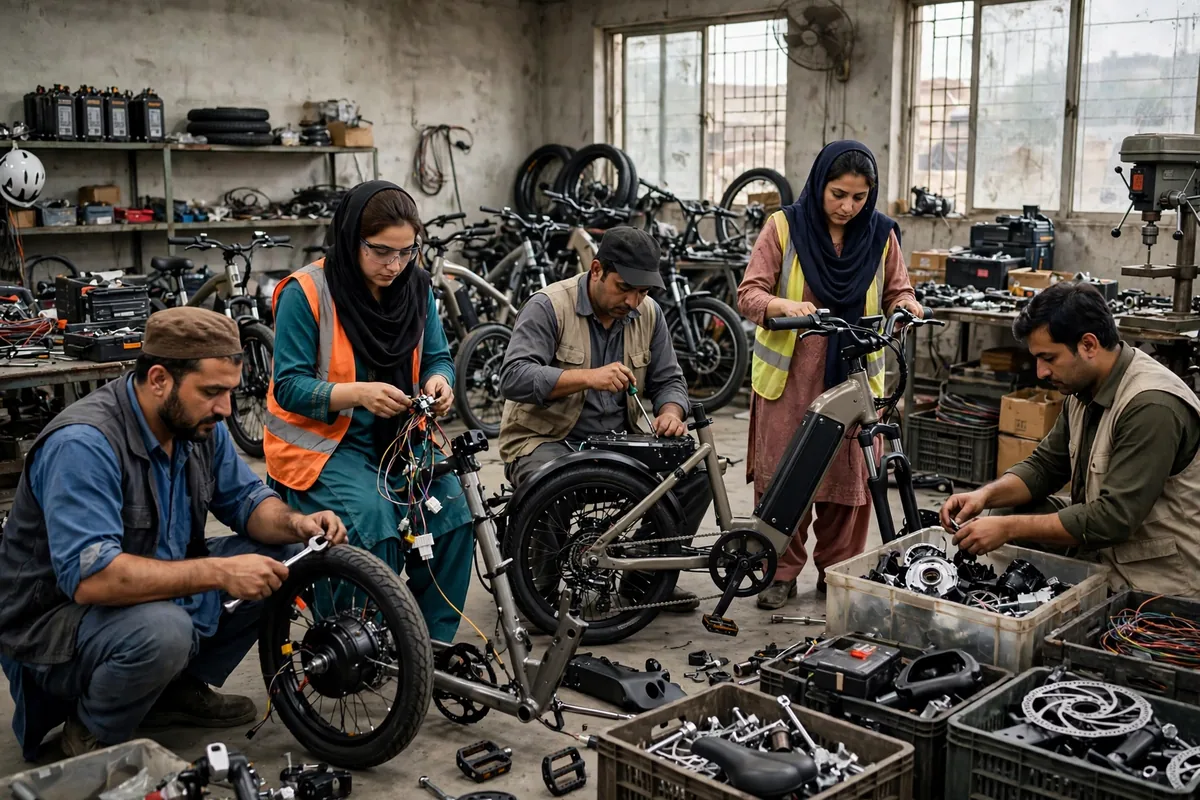
Pakistan’s motorcycle industry is one of the world’s largest by volume, and its factories and parts ecosystem are steadily adding electric models and components — motors, controllers and eventually more of the battery chain. Local assembly matters for owners in very practical ways: spare parts appear in ordinary markets, mechanics learn the machines, and resale values firm up because buyers trust they can maintain what they buy. Expect the next years to bring more Pakistani-assembled models at sharper prices, especially in the commuter classes the schemes buy in bulk. National energy and industry policy — visible through bodies such as NEPRA and the energy conservation authorities — continues to favour electric two-wheelers as a way to cut the national petrol import bill.
Future of Electric Bikes in Pakistan: What the Market May Look Like
| Area | Direction of travel | What it means for you |
|---|---|---|
| Purchase prices | More competition, more local models | Better choice at each budget level; still confirm prices live |
| Battery replacement | Gradually cheaper, more local supply | Ownership maths improves over the bike’s life |
| Public charging | Growing in big cities, campuses, offices | Longer trips become easier year by year |
| Resale values | Firming as the fleet and parts base grow | Documented battery health will command a premium |
| Repair network | Spreading from big cities to smaller towns | Fewer “no mechanic knows it” problems |
| Policy | More scheme phases, possible fee incentives | Eligible buyers should watch announcement windows |
The Uncertainties, Stated Plainly
An honest outlook names the risks too. Electricity load shedding still shapes charging life in many areas, and tariff rises narrow the running-cost gap if petrol prices fall at the same time. Battery quality in the cheapest imports varies, and a market growing this fast attracts sellers whose warranties will not survive contact with reality. Finally, policy support can change with budgets and governments; a scheme phase announced is not a scheme phase delivered until bikes are actually handed over — which is why applicants should follow the process properly, through pages like Check Status, rather than paying any agent who promises to “arrange the future” for a fee.
So: buy now, or wait?
Waiting buys you next year’s slightly better model and skips this year’s fuel savings — for a daily rider, the monthly saving usually outweighs the improvement. If your commute is long, your charging is sorted and a scheme or fair showroom price is in front of you today, the future’s direction argues for starting now and letting the market improve around a bike you already own. If your charging situation is unresolved or your riding is occasional, waiting costs you little. The technology will keep improving either way; the savings only start when the bike does.
FAQs
Will e-bikes replace petrol bikes completely in Pakistan?
Not completely and not soon. Expect e-bikes to take a growing share of city commuting — their strongest ground — while petrol remains important for long-distance and heavy-duty use for many years.
Are e-bike prices expected to fall?
Competition and local assembly push that way, and global battery costs keep easing, but currency movements can reverse the local price trend in any year. Buy on today’s verified price, not a forecast.
Will charging stations reach smaller cities?
Growth starts in the big cities, campuses and along highways, then spreads with the vehicle fleet. Home charging will remain the backbone for most riders everywhere, which is why it matters more than public points for daily use.
Is a scheme bike a good long-term buy?
Yes, if the model fits your route: scheme bikes are mainstream commuter models with the same parts ecosystem as showroom equivalents. Keep your documents, service record and battery care in order and it will serve and resell like any well-kept bike.
What is the biggest risk of buying an e-bike today?
Not the technology — the seller. An unknown brand with an unclear battery warranty is the main way buyers get hurt. Established sellers, written warranties and a stated battery replacement price protect you against almost everything else.
Conclusion
The future of electric bikes in Pakistan points one way: more schemes, more local manufacturing, cheaper batteries over time, wider charging and firmer resale — with honest uncertainties around tariffs, load shedding and seller quality. For the daily rider, that future is already useful today. Buy a sound bike from a seller who will still exist tomorrow, look after its battery, and you are not betting on the trend — you are riding it.