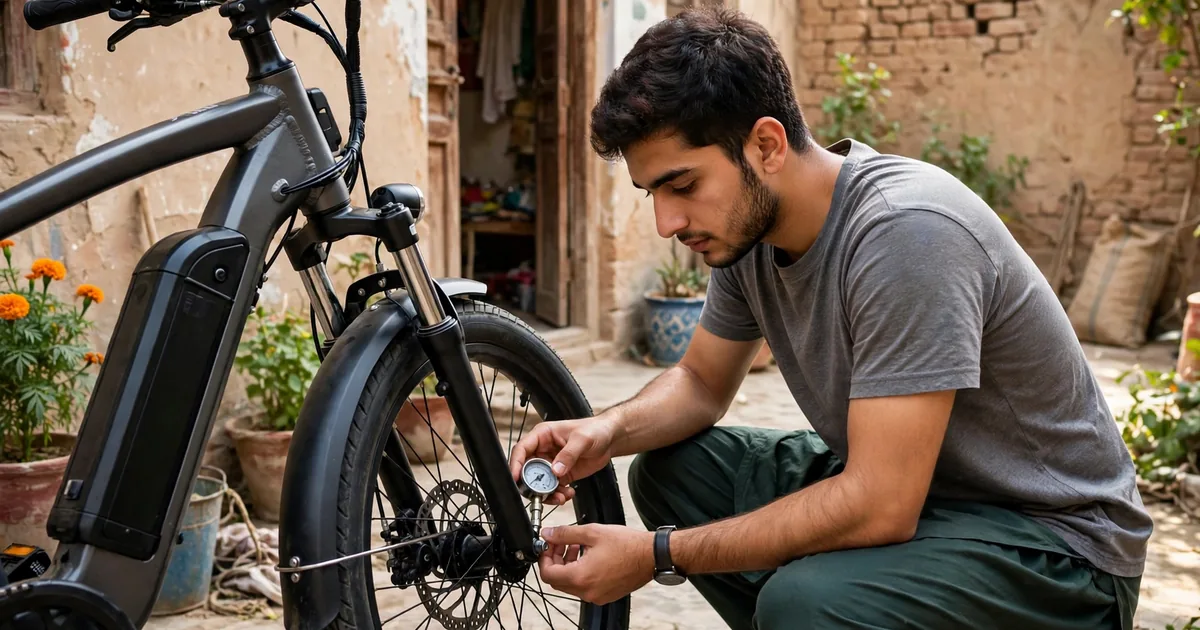
This beginner-friendly e bike maintenance guide starts from a reassuring fact: an electric bike needs far less routine maintenance than a petrol bike. There is no engine oil, no clutch plates, no carburettor and no exhaust to worry about. What remains is a short list of simple checks — tyres, brakes, chain or belt where fitted, battery connections and general cleanliness — that any owner can learn in one afternoon and repeat in minutes.
Follow the schedule below and your bike will stay safe, keep its range, and avoid the small neglects that turn into expensive repairs.
What an E Bike Maintenance Guide Covers (and What It Does Not)
An electric bike has two halves. The bicycle half — tyres, brakes, chain, suspension, bearings — is familiar, cheap and mostly owner-serviceable. The electric half — battery, motor, controller and charger — is sealed, long-lived, and largely hands-off: you keep it clean, dry and correctly charged, and you leave internal faults to qualified technicians. Most “maintenance problems” beginners meet live in the bicycle half, which is good news for your wallet.
The golden safety rule
Never open the battery pack or controller, and never work on wiring with the bike switched on or charging. Everything in this guide is external, mechanical and safe; anything involving opened electronics belongs in a workshop.
Your Maintenance Schedule at a Glance
| Interval | Checks and jobs | Where |
|---|---|---|
| Before each ride | Brakes squeeze firmly, tyres look inflated, lights work, battery seated | Home — 1 minute |
| Weekly | Tyre pressure to the figure in your manual/on the tyre wall; wipe the bike down; check chain tension and lubrication where a chain is fitted | Home |
| Monthly | Brake pad wear, loose bolts (mirrors, stand, carrier), connector cleanliness, cable damage check, range log review | Home |
| Every few months | Deeper brake and bearing check, suspension feel, charger cable condition | Home or workshop |
| Yearly / as advised | Full service at an authorised workshop; battery health check | Workshop |
Keep the intervals honest rather than perfect. A rider who does the weekly list most weeks will out-maintain a rider with a beautiful printed chart and no habit.
The Big Five Checks, Explained Simply
1. Tyres
Correct pressure protects range, grip and the tyre itself. Under-inflated tyres are the top silent range-killer and the top cause of puncture damage to the rim. Use the pressure printed on the tyre sidewall or in your manual, and inspect for cuts, embedded stones and tread wear while you are there.
2. Brakes
Squeeze both levers before every ride: they should feel firm and stop the bike smartly at walking pace. If a lever pulls too far, feels spongy, or you hear grinding, ride gently to a mechanic — brakes are the one system where “later” is never acceptable. Keep brake pads ahead of the wear limit shown in your manual.
3. Chain or belt (where fitted)
Many e-bikes use a chain, some a belt or direct hub arrangement. A chain should be clean, lightly lubricated and neither slack nor banjo-tight; a dry, rusty chain wastes your battery’s energy as noise and heat. Belts mainly need a visual check for cracks and correct tension.
4. Battery and connectors
The battery should sit firmly with no play, its case undamaged and its connectors clean and dry. A monthly dry-cloth wipe is enough. Any swelling, smell, or abnormal heat is a stop-and-seek-help sign, not a maintenance job.
5. Bolts, stand and lights
Vibration loosens things quietly. Monthly, run a hand over mirrors, carrier, mudguards and the stand, and test headlight, tail light and indicators — visibility is safety equipment, especially in winter fog and monsoon rain.
6. Keeping simple records
Maintenance works far better when it is written down, even roughly. Keep one page in a notebook or phone note with three things: the date of each monthly check, your typical full-charge range that month, and anything you replaced or adjusted. That tiny record spots slow problems early — a brake pad finishing, a battery gently ageing — and it is gold if you ever make a warranty claim, because it proves the bike was looked after. It also helps a mechanic: instead of describing a noise from memory, you can say exactly when it started and what changed at the same time.
Monsoon and Summer Care in Pakistan
Summer dust and monsoon water are the two local stresses. In summer, park in shade, wipe dust from connectors, and never charge a sun-baked battery immediately. In monsoon, avoid deep standing water — most e-bikes tolerate rain riding but not submersion of the motor or battery — dry the bike after wet rides, and pay extra attention to brakes, which need a gentle squeeze or two to clear water before they bite fully. Owners preparing their bikes under a scheme can also revisit the delivery and usage basics on this site’s E Bike Scheme hub, and student riders will find campus-specific usage notes on the E Bike Scheme for Students page.
For general road-safety rules that sit behind all of this, Pakistan’s National Highway and Motorway Police publish public guidance at nhmp.gov.pk.
FAQs
How much does routine e-bike maintenance cost?
Far less than a petrol bike’s routine servicing, because there is no oil, filters or engine tuning. Your regular costs are mainly brake pads, tyres and occasional chain or cable items, plus electricity for charging.
Can I wash my e-bike with a pressure washer?
No. Use a bucket, sponge and low-pressure rinse, and keep water away from the battery, motor hub and connectors. Pressure jets force water past seals that ordinary rain never troubles.
What tools should a beginner keep at home?
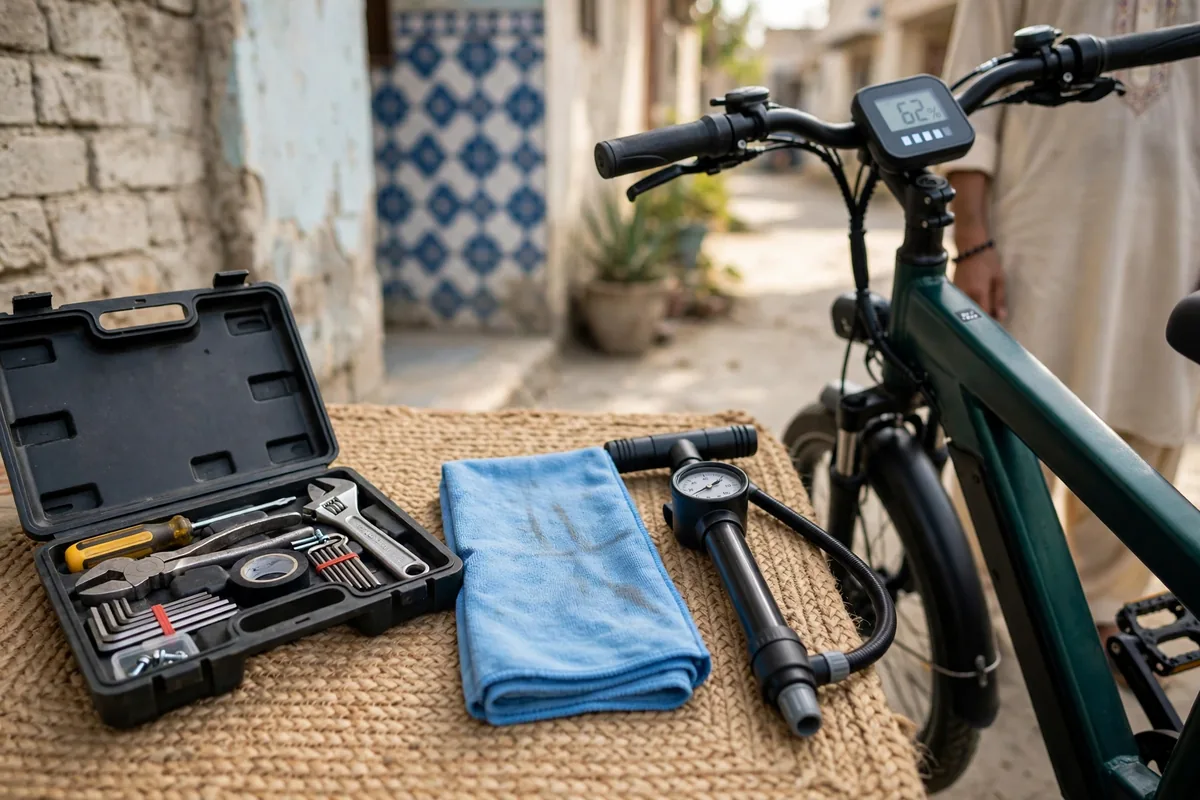
A tyre pump with gauge, a basic spanner and Allen-key set, a cloth, chain lubricant where a chain is fitted, and a small torch. That kit handles every home job in this guide.
My bike makes a new noise. What should I check first?
Work through the simple list: tyre rubbing a mudguard, loose stand or carrier, dry chain, worn brake pads touching the disc or rim. If the noise is electrical — buzzing or cutting out from the motor area — stop guessing and visit a workshop.
Does servicing at an outside shop affect my scheme warranty?
It can, for the electrical parts especially. Follow the warranty conditions in your delivery documents and use authorised service for battery, motor and controller work.
Conclusion
Maintaining an e-bike is a short, learnable routine: one-minute checks before rides, five minutes weekly, a slightly longer look monthly, and professional help for anything sealed or electrical. Build the habit and your bike stays safe, efficient and cheap to run — exactly what a scheme bike is meant to be.