
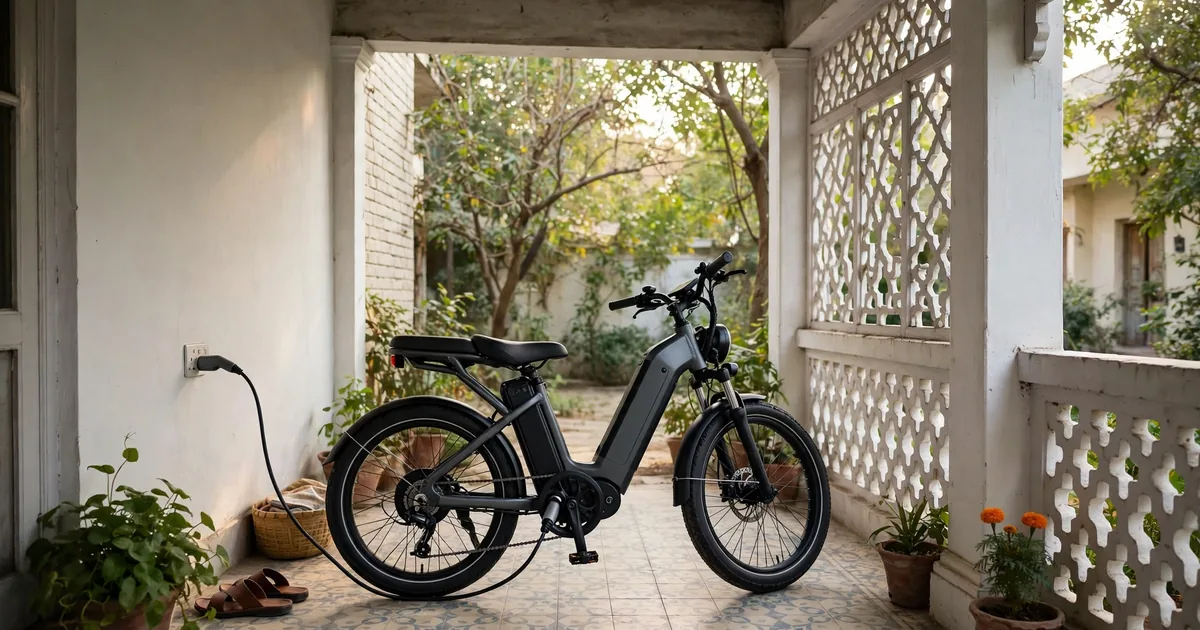
Done properly, e bike charging at home is the cheapest and most convenient fuelling any vehicle owner in Pakistan has ever had: park, plug in, and wake up to a full battery for a fraction of a petrol fill. Done carelessly — through a loose multi-plug on a thin extension, next to a gas cylinder, during wild voltage swings — the same routine can damage your charger, shorten your battery’s life, or worse. The difference is a handful of wiring and safety basics that this guide lays out.
If your home has one good socket in the right place and a simple routine around load shedding, you already have everything a safe home-charging setup needs.
The Right Socket: Foundation of E Bike Charging at Home
Your charger draws modest power compared with a kettle or an iron, but it draws it for hours at a stretch, which is harder on poor wiring than a short burst. Follow these basics:
- Use a proper wall socket in good condition, ideally one on a sound circuit with correct earthing. If a socket is loose, cracked, warm to the touch or sparks, have an electrician replace it before using it for charging.
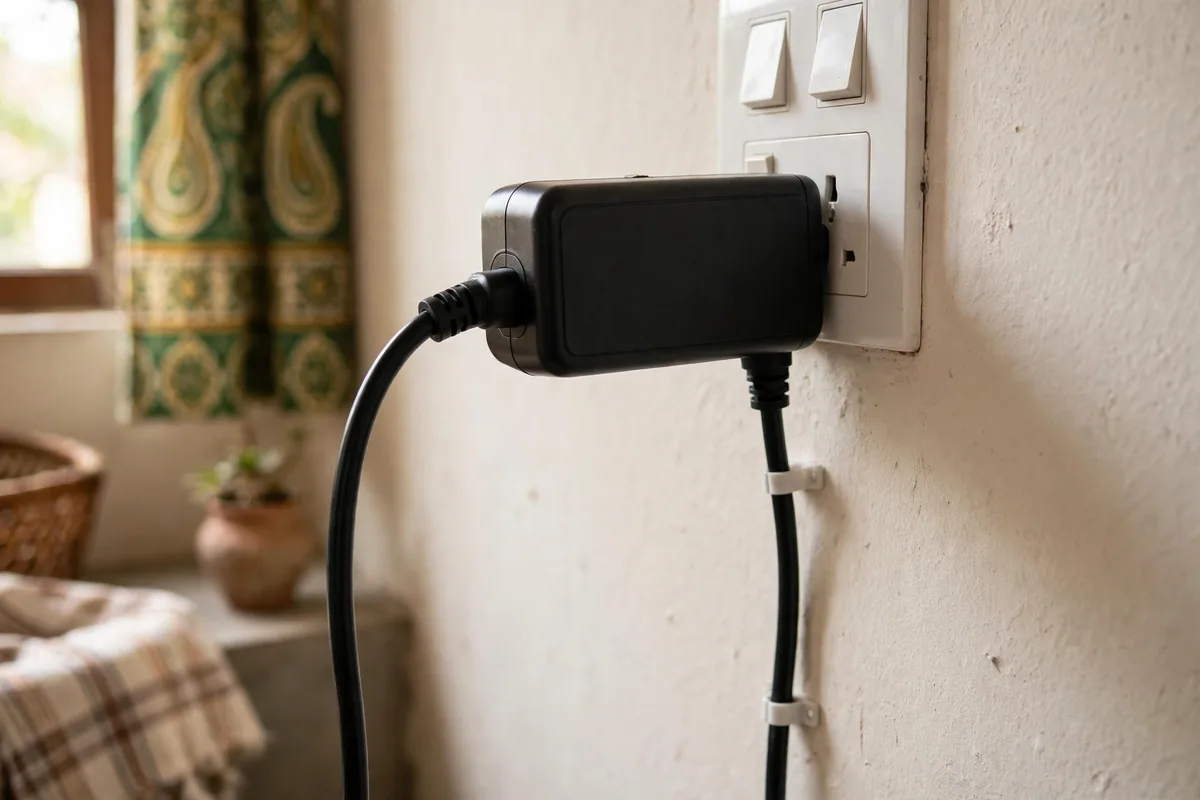
- Plug the charger directly into the wall. Avoid multi-plugs, adapters stacked on adapters, and long thin extension reels, which heat up under hours of continuous load. If an extension is unavoidable, use a short, thick, fully unrolled one rated for the load.
- Keep the charging point dry and shaded — a covered porch, garage corner or indoor spot away from rain splash and direct sun.
- Give cables a safe path: not across walkways where people trip and yank the plug, and never pinched under doors or furniture.
Should you install a dedicated point?
If you charge every night, asking an electrician to fit one sturdy socket near your parking spot — on its own breaker, with good earthing — is the single best upgrade you can make. It is a small one-time job that removes extension leads and loose sockets from your life permanently. General electrical safety awareness material is also published by Pakistan’s regulator at nepra.org.pk.
Charging Safety Rules That Are Not Optional
| Rule | Why it matters |
|---|---|
| Use only the charger supplied or manufacturer-approved for your bike | Wrong voltage/current can overcharge the pack and create a fire risk |
| Charge on a hard, non-flammable surface, battery ventilated | Contains risk if anything overheats; keeps heat from building up |
| Keep the charging area away from gas cylinders, stoves and stored fuel | Removes ignition neighbours from the one warm device in the corner |
| Never cover the charger or battery while charging | Both release heat; covering traps it |
| Stop if anything smells burnt, buzzes loudly or gets unusually hot | These are early warnings — unplug, let it cool, and get the charger or battery checked |
| Keep chargers and connectors out of children’s reach | Curiosity plus electricity needs no further explanation |
Load Shedding: Charging Smart When Power Comes and Goes
In load shedding areas, the pattern of your day decides your battery more than the charger does. Practical tactics used by experienced owners:
- Charge whenever power is available, in smaller top-ups, rather than planning one perfect long session that an outage may cut anyway. Lithium batteries are perfectly happy with partial charges.
- Plug in as soon as you park if power is on — do not wait for a “later” that may be dark.
- Protect against surges: when power returns after an outage, voltage can swing. A good quality surge protector between the wall and charger is cheap insurance, and plugging in a few minutes after restoration avoids the roughest moment.
- Be careful with UPS and generator charging: some backup sources produce rough output that stresses chargers. If you must use one, prefer a reputable pure-sine-wave source and stop if the charger heats abnormally.
- Keep a range buffer: in heavy load shedding weeks, ride as if tomorrow’s charge is uncertain — finish the day with charge in hand where you can.
Owners who received bikes under government phases can align their routine with the usage guidance given at delivery and the scheme basics on the E Bike Scheme hub of this site, while student riders juggling hostel power timings will find the campus-focused page E Bike Scheme for Students useful for planning around shared sockets.
A Simple Nightly Charging Routine
- Park in your shaded, dry spot and let the battery cool for 20–30 minutes after the last ride.
- Connect the charger to the bike first, then plug into the wall socket, as your manual directs.
- Confirm the indicator shows charging; route the cable safely out of the walkway.
- When the indicator shows full, unplug — wall first or bike first, again as your manual directs — and coil the cable loosely for storage.
- Once a week, glance over the plug, cable and connectors for damage, heat marks or dust, and wipe connectors with a dry cloth.
FAQs
Can I charge my e-bike from a normal home socket?
Yes — home charging is designed for ordinary sockets. The conditions are that the socket and wiring are in good condition, properly earthed, and the charger is plugged in directly rather than through flimsy adapters or extensions.
Is it safe to leave the bike charging overnight?
With the correct charger, a sound socket and a clear, ventilated spot, overnight charging is the normal routine for most owners. Unplug when full in the morning, and never leave a damaged charger or a battery showing warning signs connected unattended.
What should I do if the charger gets very hot?
Warm is normal; too hot to hold comfortably is not. Unplug, let everything cool, check the socket and cable for damage, and have the charger tested before trusting it again.
Can load shedding damage my battery?
The interruptions themselves are a nuisance rather than a killer — partial charges are fine. The real risks are voltage surges when power returns and rough backup supplies, which a surge protector and sensible timing largely solve.
Should I charge indoors or outdoors?
Either is fine if the spot is dry, shaded and ventilated, the socket is sound, and the area is away from fuel and cooking flames. A covered porch is the popular compromise in most Pakistani homes.
Conclusion
Safe e bike charging at home rests on three things: one good earthed socket used directly, the correct charger treated with respect, and a routine that works with load shedding instead of fighting it. Set that up once, and your nightly plug-in becomes the easiest “fuel stop” you will ever make.