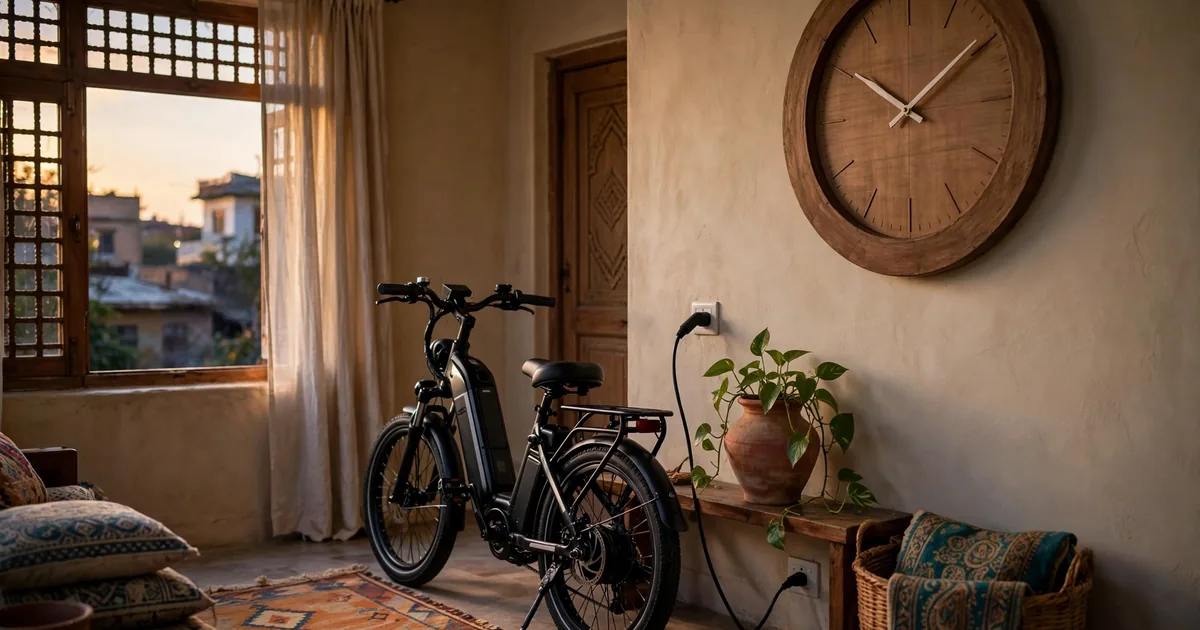
Knowing your e bike battery charging time turns charging from a guessing game into a plan. New owners ask the same question in two forms: “How many hours until full?” and “Will it be ready by morning / by class / by the office?” The honest answer depends on three things — how big your battery is, how empty it is when you plug in, and which charger you are using — and once you understand those, you can predict your own bike’s timing within half an hour.
This guide gives typical ranges for the battery types common in Pakistan, explains why times vary, and shows how to plan your riding day around the charger instead of the other way around.
What Decides Your E Bike Battery Charging Time
Charging is like filling a water tank with a tap. Battery capacity is the size of the tank; charger output is the speed of the tap. Divide one by the other and you get a rough time, with two refinements:
- How empty the battery is: a half-empty battery takes roughly half the full-charge time. Most daily charging starts from a partial discharge, so most daily sessions are shorter than the “from empty” figure.
- The final stretch is slower: lithium chargers ease off near full charge to protect the cells, so the last portion takes proportionally longer than the first. A battery may reach a useful level relatively quickly, then take much longer to squeeze in the final part.
- Battery age and temperature: an ageing pack, or one being charged while very hot or very cold, can charge less predictably than a fresh pack at room temperature.
Why you should not chase faster times with a bigger charger
It is tempting to think a higher-rated charger is a free upgrade. It is not: charging faster than the battery and its management system are designed for stresses the cells and can be dangerous. Use the charger supplied with the bike or a manufacturer-approved replacement of the same rating. Your time saving is measured in minutes; the risk is measured in battery life — or worse.
Typical Charging Times by Battery Type
The figures below are broad, typical ranges for common e-bike setups in Pakistan when charging from near empty with the standard charger. Your manual’s figure for your exact model always wins over a general guide:
| Battery type / size class | Typical full charge (from near empty) | Typical daily top-up (partial use) |
|---|---|---|
| Small lithium pack (light commuter) | Roughly 3–5 hours | Often 1.5–3 hours |
| Mid-size lithium pack (standard commuter) | Roughly 4–6 hours | Often 2–4 hours |
| Large lithium pack (long-range model) | Roughly 6–8 hours | Often 3–5 hours |
| Lead-acid pack (budget models) | Roughly 6–10 hours | Often 4–6 hours; recharge promptly after use |
Read the ranges as planning tools, not promises. Two identical bikes can show different times because one rider plugs in at 40% remaining and the other at 10%.
Planning Your Day Around Charging
- Anchor charging to your sleep or work hours. For most owners, plug in after the last evening ride (letting the battery cool first) and unplug in the morning, or charge during office/institute hours where permitted. The session happens while the bike is parked anyway.
- Build the buffer backwards: if you must leave at 8 a.m. and your full charge takes five hours from empty, an interrupted night still leaves you workable range if you plugged in by early evening.
- Top up opportunistically in load shedding season: whenever power is available for an hour, take the hour. Partial charges are healthy for lithium packs and add up across the day — see this site’s E Bike Scheme hub for the home charging safety guide that pairs with this planning.
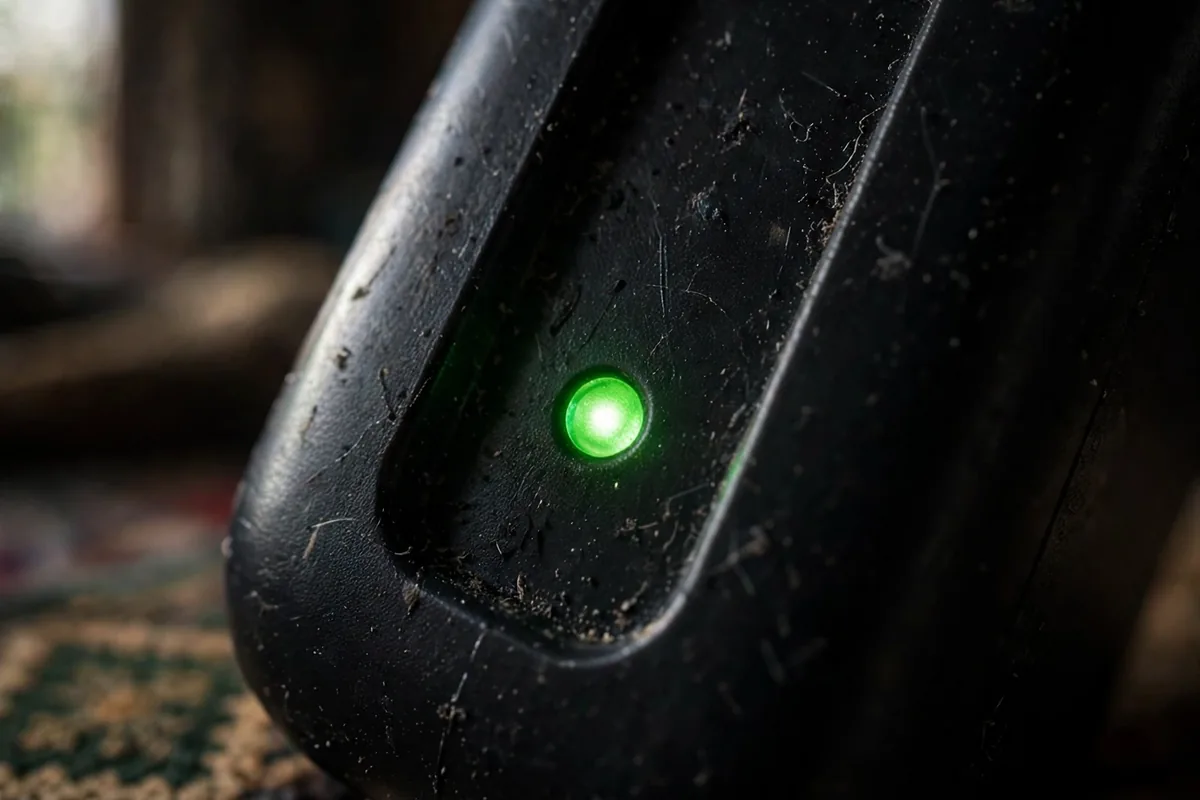
- Watch the indicator, not the clock, for the first weeks: note when the charger light changes at different starting levels; your own log soon beats any article’s estimates.
Students balancing hostel routines can also look at the usage pattern described on the E Bike Scheme for Students page, where shared charging points make planning even more valuable. For wider context on electric mobility in Pakistan, the Alternative Energy Development Board publishes background material at aedb.org.
Signs Your Charging Time Is Not Normal
- Much faster than usual to “full”: can mean the battery is no longer holding its real capacity.
- Much slower, or never finishing: suspect the charger, the socket, or a battery fault, in that order of simplicity.
- Excess heat in charger or battery: stop, unplug, cool, and get it checked — heat is information, not a quirk.
- Indicator behaviour changes suddenly: lights that jump, flicker abnormally or stay red for many extra hours deserve a workshop visit before a long ride depends on them.
FAQs
Can I ride before the battery is fully charged?
Yes. A partial charge gives partial range, and lithium batteries handle this pattern well. Unplug, ride, and charge again later — there is no need to wait for green every single time.
Does charging to full every night harm the battery?
Charging to full for daily use is normal practice with the standard charger; the gentlest long-term pattern is to avoid leaving the pack sitting at full charge unused for many days. If the bike will rest, store it around half charge instead.
Why did my charging time change after a year?
Some change is expected as the battery ages and its capacity gently declines; times can shorten because there is less capacity to fill. A dramatic change, especially with heat or a big range drop, should be checked professionally.
Is fast charging available for e-bikes?
Some models and chargers support quicker charging within the manufacturer’s design. Only use fast options the maker explicitly provides or approves for your exact battery; improvised high-rate charging is unsafe.
How long does a charge during load shedding actually help?
Every connected hour adds real range — roughly proportional to the share of a full session that hour represents for your battery and charger. Short, frequent top-ups are a perfectly good strategy in outage-prone areas.
Conclusion
Your e bike battery charging time follows a simple logic: battery size, starting level and the correct charger. Learn your own bike’s pattern in the first two weeks, anchor charging to parked hours, and use top-ups freely when power allows. With that, the charger quietly fits around your life instead of ruling it.