
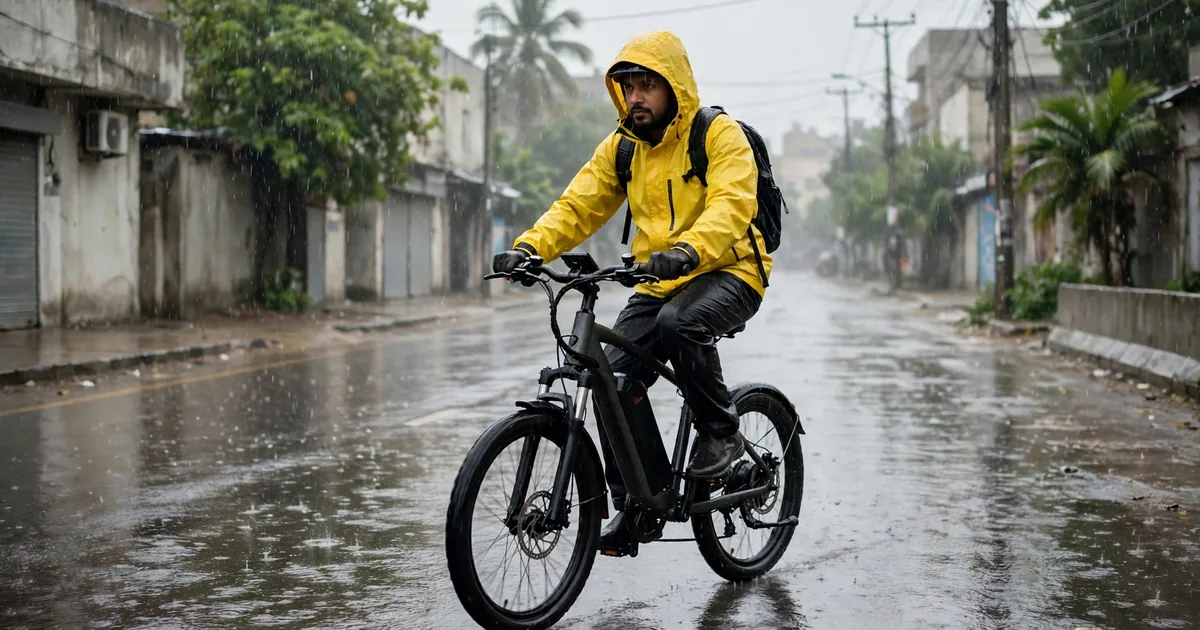
Monsoon riding is where good habits matter most, and these e bike safety tips rain riders can follow will help you get home safely when Lahore, Karachi or Islamabad roads turn slippery. An electric bike is perfectly usable in the rain — manufacturers design the motor, battery and wiring for normal wet weather — but water changes how tyres grip, how brakes bite and how other drivers see you. A little preparation before and during a wet ride makes a big difference.
This guide covers tyres, brakes, electrical care, visibility and riding technique, written for Pakistani monsoon conditions: flooded underpasses, oily first rain, open manholes and sudden downpours.
Why Rain Changes Everything for an E-Bike Rider
The first fifteen minutes of rain are the most dangerous. Months of dust, diesel and oil sit on Pakistani roads, and the first shower turns that layer into a slick film before it washes away. Grip can drop sharply, painted road markings and metal covers become almost frictionless, and braking distances grow. At the same time your e-bike’s instant torque — normally a pleasure in traffic — can spin the rear wheel if you open the throttle suddenly on a wet surface.
There is also the electrical side. Rain itself is rarely a problem for a sealed battery pack and hub motor, but deep standing water is different: riding through water that reaches the motor hub or the battery connectors can force moisture inside and cause expensive damage. Treat flooded patches with the same respect you would give them on a petrol bike, and then a little more.
Tyres: Your First E Bike Safety Tips Rain Priority
Tyres are the only thing touching the road, so their condition decides how much of the advice below even matters. Before the monsoon season starts, check three things:
- Tread depth: worn, smooth tyres cannot clear water from under the contact patch. If the tread grooves look shallow, replace the tyre before the rains, not after your first slide.
- Tyre pressure: keep pressure at the level printed on the tyre sidewall or in your manual. Badly over-inflated tyres reduce the contact patch; under-inflated tyres feel unstable and can damage the rim on a hidden pothole.
- Cracks and cuts: old rubber hardens and cracks, and hard rubber grips poorly when wet. Run your fingers over the sidewalls and look for fine cracking.
During the ride, avoid painted lines, zebra crossings, metal drain covers and shiny repaired patches whenever you can safely change line — all of them are far more slippery than plain asphalt when wet. Cross them upright, at steady speed, without braking or accelerating.
Braking on Wet Roads Without Locking a Wheel
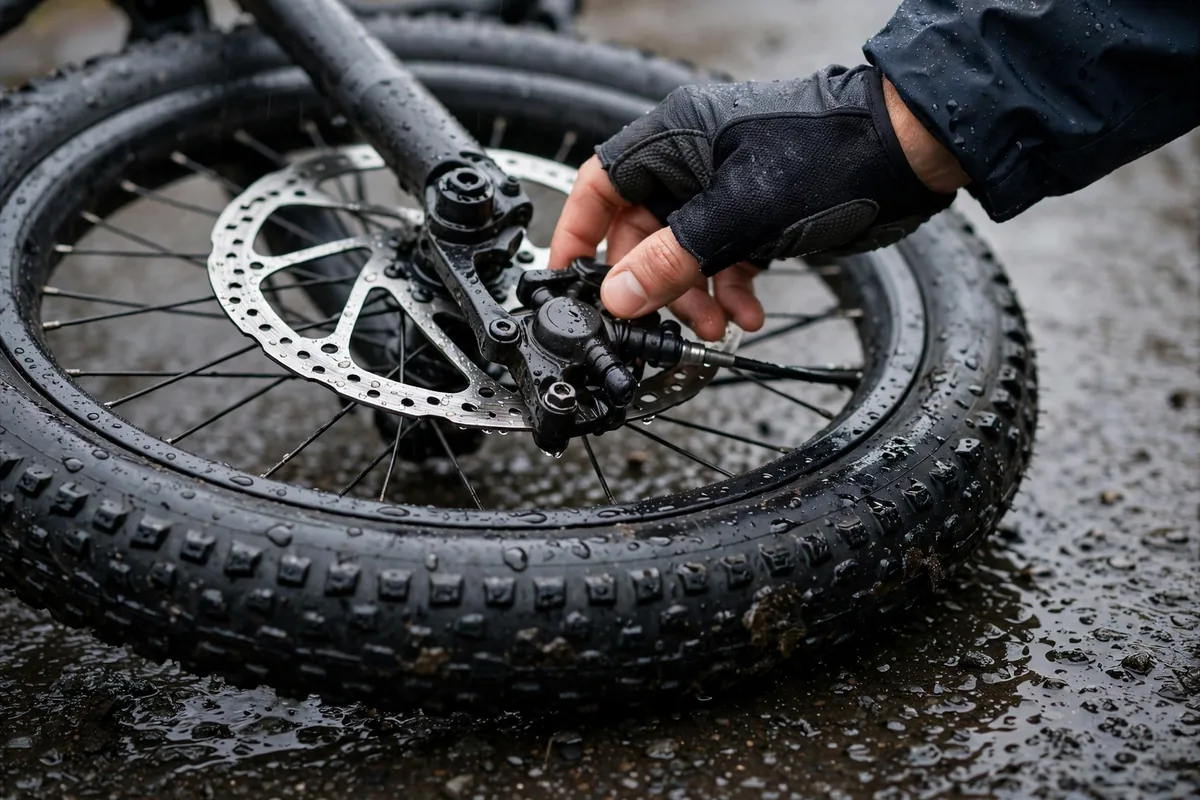
Wet braking is a technique, not just stronger squeezing. Because grip is lower, the same lever force that stops you quickly on a dry road can lock a wheel in the rain — and a locked front wheel usually means a fall.
- Start braking earlier: double your following distance in rain so you rarely need a hard stop.
- Squeeze progressively: apply the brakes gently first so weight shifts onto the front tyre, then increase pressure smoothly.
- Use both brakes together: balanced braking keeps the bike stable; relying only on the rear brake invites a sideways slide.
- Test after deep puddles: water on the brake pads or disc reduces bite. Lightly apply the brakes for a few metres after a flooded patch to dry them.
- Slow before the turn, not in it: braking and turning together ask the tyre for more grip than a wet road can give.
If your e-bike has regenerative braking, use a lower assist level in heavy rain so power delivery stays gentle.
Protecting the Battery, Motor and Electronics
Modern e-bikes sold in Pakistan are built to handle rain riding, but they are not built for swimming. Follow these rules to keep the electrical system safe:
- Never ride through water above the wheel hub. If you cannot judge the depth of a flooded underpass, turn around — Karachi and Lahore underpasses collect water fast.
- Do not charge a wet bike immediately. Wipe the charging port dry and let the bike stand for a while before plugging in.
- Never use a pressure washer on the battery, motor or display. A bucket, sponge and low-pressure hose are enough.
- Check connector seals every few weeks in monsoon; a cracked rubber cap is a cheap part that protects an expensive battery.
- Dry and ventilate after the ride: park under cover, wipe the frame and battery casing, and let air circulate around the bike.
Students who received their bike through a scheme should protect it extra carefully, because a water-damaged battery can cost more than a semester’s travel budget. If you are still applying, see the E Bike Scheme for Students page for the student offers.
Visibility: Be Seen When the Sky Turns Grey
Most monsoon accidents are not about skill; the other driver simply did not see the rider. Rain, spray and fogged visors shrink everyone’s vision, so make yourself obvious:
| Item | Why it matters in rain | Quick tip |
|---|---|---|
| Headlight on | Daytime rain hides bikes in spray | Keep it on for every wet ride, day or night |
| Bright rain jacket | Dark colours disappear against wet roads | Choose yellow or orange with reflective strips |
| Clean visor / glasses | Water droplets distort your view | Carry a soft dry cloth in a plastic bag |
| Working rear light | Drivers behind see you late in spray | Check it weekly during monsoon |
| Indicators & horn | Signals must replace hand gestures | Test both before leaving |
Check the Pakistan Meteorological Department forecast before long rides in monsoon weeks; postponing a trip by one hour often means missing the worst of a storm completely.
After the Ride: A Five-Minute Wet-Weather Routine
Rain care does not end when you park: wipe down the frame and brake discs, spin the wheels and squeeze the brakes a few times to throw off water, and re-lube the chain after two or three wet rides to prevent rust. Store a removable battery indoors at room temperature, and never leave the bike standing in a flooded porch or street.
FAQs
Is it safe to ride an e-bike in normal rain?
Yes. E-bikes are designed for normal rain riding. The risks are slippery surfaces and deep standing water, not light or moderate rain itself. Ride slower, brake earlier and avoid flooded patches.
Can rain damage my e-bike battery?
Rain splashing on a sealed battery is normally fine. Damage happens when water is forced in — through deep flooding, pressure washing or a broken connector seal. Keep seals intact and never submerge the pack.
Should I reduce tyre pressure for more grip in the rain?
No, not below the recommended level. Very low pressure makes the bike unstable and risks rim damage on hidden potholes. Correct pressure with healthy tread gives the best wet grip.
What should I do if I must cross a flooded street?
First, try another route. If you must cross and the water is clearly below the wheel hubs, go slowly and steadily without stopping, then dry the brakes with a few light applications and check the bike afterwards.
Is it okay to charge the bike right after a wet ride?
Wait until the charging port area is dry. Wipe the bike down, let it stand under cover for some time, and inspect the connector before plugging in.
Conclusion
Safe monsoon riding on an e-bike comes down to preparation: healthy tyres at the right pressure, smooth early braking, sealed electrics kept out of deep water, and clothing and lights that make you impossible to miss. Follow these rain safety basics, give yourself extra time on wet days, and your e-bike will serve you reliably through every monsoon season in Pakistan.