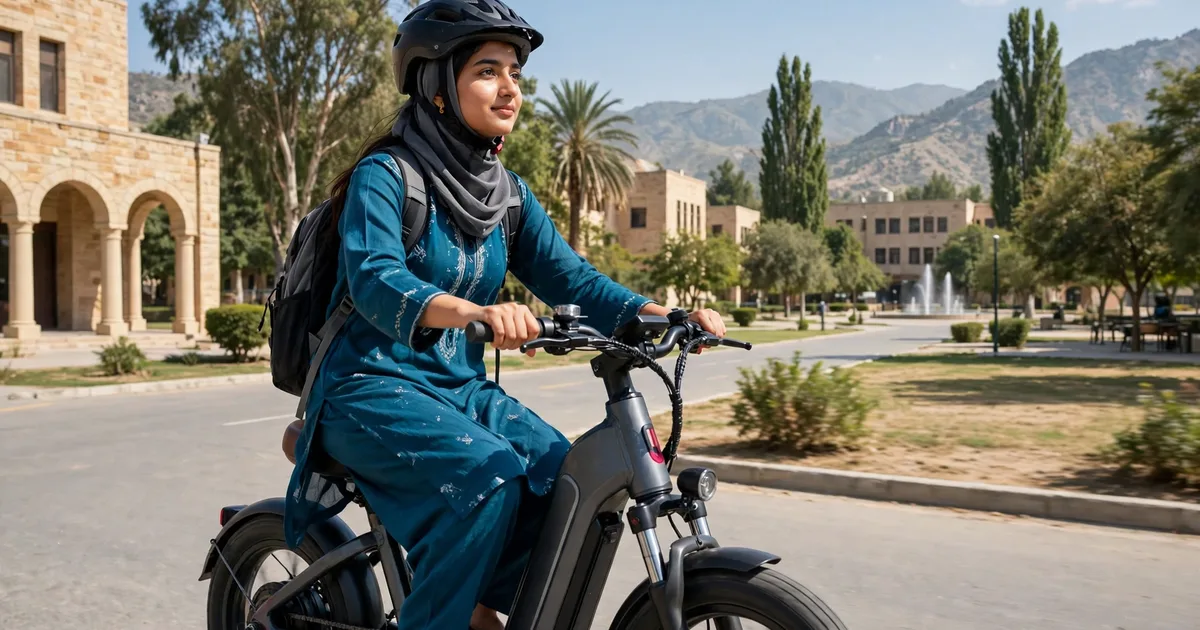
For thousands of female students and teachers in Pakistan, the daily journey is the hardest part of education — crowded buses, expensive rickshaws and constant dependence on someone else’s schedule. The e bike scheme for women exists to change exactly that, with reserved quota and financing designed so women can own their transport, often for the first time.
If you are a female student or teacher thinking about applying, this guide covers everything you should know: how the women’s quota works, who is eligible, which documents to prepare, how the money side works, and how to choose and use a bike safely and confidently.
Please note: ebikescheme.online is an independent informational website, not a government website. Quota numbers and conditions are announced officially for each phase, so always confirm them in the official announcement.
Why There Is a Separate E Bike Scheme for Women Focus
Government transport schemes in Pakistan have learned that when women compete only in a general pool, social and family barriers quietly filter many of them out before they even apply. A reserved quota for women solves this in two ways. First, a fixed share of bikes is set aside, so eligible women are not pushed out by sheer volume of general applications. Second, the reserved quota sends a clear signal to families: this programme is meant for your daughters, sisters and wives too, and the government expects them to ride.
In practice, women applicants are normally considered both in the women’s quota and under the general rules of their category — student or teacher — according to the terms of the phase. Read your phase’s announcement to see exactly how its quota is structured.
Eligibility for Women Applicants
The eligibility base is the same as for everyone else, applied to your own record:
- A valid CNIC in your own name. This is essential — applications cannot be made on a father’s or husband’s CNIC.
- Enrolled student or serving teacher, depending on the category you apply in, with the enrolment or service proof to match.
- Provincial condition — domicile or institute in the province running the scheme, where the phase requires it.
- No previous similar benefit — one subsidised bike per person across government schemes.
- Licence or learner permit, where the phase requires it for the model being offered.
Female students can combine this guidance with the E Bike Scheme for Students page, and teachers with the E Bike Scheme for Teachers page, which cover the category-specific details for each group.
Documents women applicants should prepare early
Prepare the standard set — CNIC, student card or service certificate, domicile, photograph — plus two items women applicants most often delay: the learner permit, which needs a licensing visit, and, for bank-financed phases, the guardian or guarantor documents where the scheme’s bank process asks for them. Starting these two early removes almost all last-minute stress.
How the Application Works for Women, Step by Step
- Confirm your category and quota in the official announcement for the current phase.
- Prepare documents from the list above, with clear scans for the online form.
- Apply online yourself through the official portal, on your own CNIC and your own active mobile number. Do not hand your CNIC copy to an agent to “apply for you”.
- Keep the tracking ID and follow the status on the portal and by SMS.
- Complete verification — institute confirmation and, in financed phases, the bank’s file process.
- Take delivery, complete registration formalities, and confirm the installment schedule in writing if the bike is financed.
Announcements for Punjab government programmes are published through punjab.gov.pk; use it to verify any news about a women’s quota that reaches you through social media before acting on it.
Choosing the Right Bike: What Matters for Women Riders
| Factor | What to prefer | Why it matters |
|---|---|---|
| Weight & seat height | Lighter model, feet can touch the ground | Confidence in traffic and easy handling |
| Range | Comfortably more than your daily round trip | No range anxiety on teaching or class days |
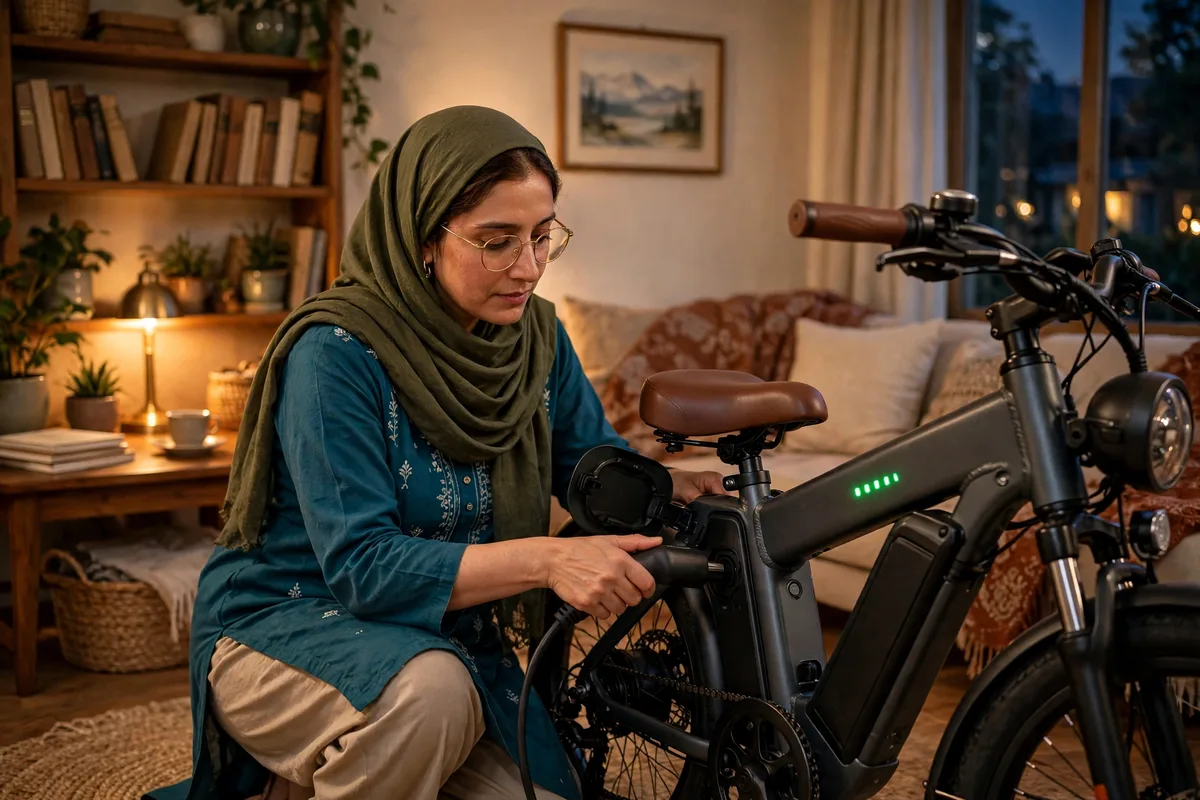
| Charging | Removable battery if you live in a flat or hostel | Charge indoors where a ground socket is unavailable |
| Storage | Under-seat space or a fitted top box | Books, bag and dupatta-safe commuting |
| Service network | Dealer and workshop near your route | Help is close if anything goes wrong |
Electric models suit most women commuters very well: no gear and clutch to manage in traffic, a quiet and smooth start, low running cost, and charging at home overnight instead of petrol-pump stops. If your daily distance is short and fixed — home to campus or school and back — even an entry-level model usually covers it with charge to spare.
Safety and Confidence on the Road
A bike gives independence; a few habits keep that independence comfortable. Always wear a properly fitted helmet — it is the single most effective safety item, and it also protects your hair and dupatta from wind and dust. Keep the dupatta or scarf secured so no loose end can reach the wheel or chain area; many women riders use a light jacket or pin for exactly this reason.
Plan your regular route on better-lit, busier roads, especially for evening classes or duties, and share your routine with family as you would with any commute. Ride the bike empty in a quiet street for the first days until starting, stopping and turning feel automatic — confidence comes quickly, usually within the first week. Finally, keep the scheme helpline, a family number and a nearby workshop’s number saved in your phone.
What It Costs a Woman Applicant, Realistically
The financial side is the same structure as other applicants: any upfront share the phase requires, the monthly installment if financed, electricity for charging, and routine maintenance. For most daily commutes, the total monthly cost of an e-bike remains well below daily rickshaw or ride-hailing spending for the same route, which is exactly why the scheme targets students and teachers. Build the installment into your monthly budget honestly before applying, and the bike stays a relief rather than a pressure.
FAQs
Can I apply on my father’s or husband’s CNIC?
No. The application, quota and bank file are all in the applicant’s own name and CNIC. Family members can support as guardian or guarantor where the scheme allows, but the bike is allotted to you.
Is there a separate application form for women?
Usually there is one form, and the women’s quota is applied from the category and gender information in it. Follow the announcement for your phase to see how its quota works.
I have never ridden a bike. Can I still apply?
Yes. Many first-time women riders learn on light electric models. Arrange your learner permit as the phase requires, practise in a quiet area, and take a few short trips before joining full traffic.
What if I live in a hostel or flat without parking charging?
Prefer a model with a removable battery that you can charge at a normal indoor socket. Confirm hostel or building rules for charging in advance.
Can women teachers and students both use the women’s quota?
Quota design varies by phase — some phases reserve seats within each category. The announcement for your phase will show whether the women’s reservation applies to students, teachers or both.
Conclusion
The e bike scheme for women is one of the most practical parts of the whole programme: reserved quota, your own name on the bike, and running costs a student or teacher budget can actually carry. Prepare your CNIC, documents and learner permit early, apply yourself through the official portal, choose a light bike with range to spare, and ride with a helmet and a planned route. That combination turns a daily struggle into a ten-minute ride that you control.