
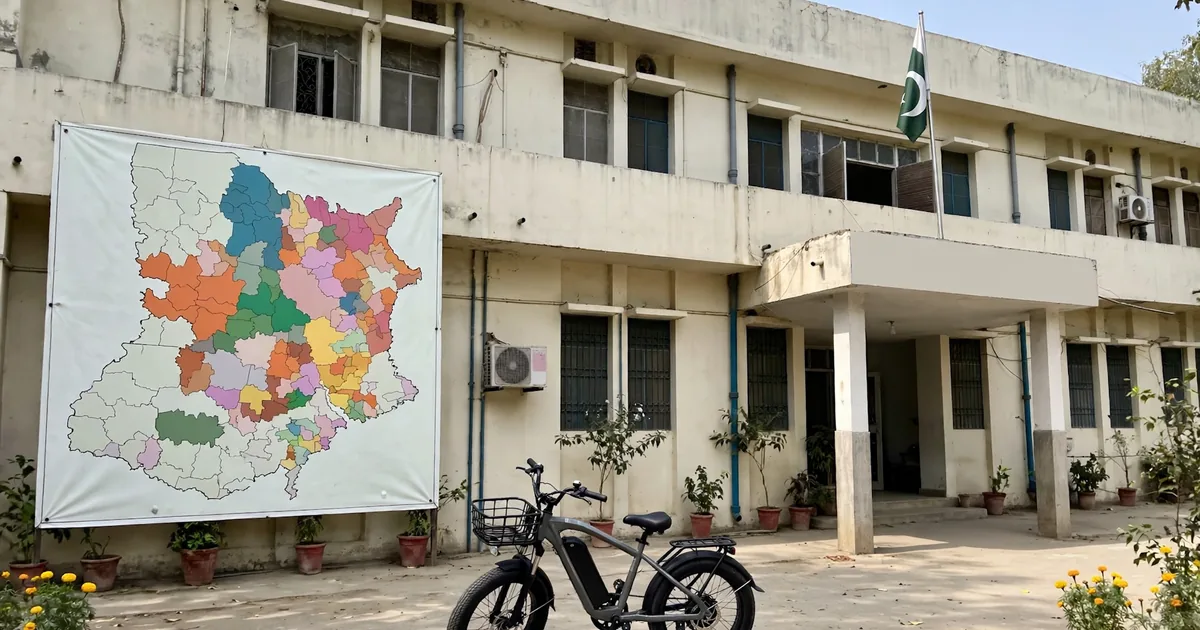
Understanding the punjab e bike scheme quota helps you judge your real chances before you apply. When the Punjab government announces a new phase of electric bikes, the total number of bikes is not given on a first-come, first-served basis. Instead, the seats are divided between districts, categories and sometimes institutes, so that applicants from smaller districts also get a fair share instead of all bikes going to Lahore alone.
This guide explains how that division usually works, what decides the size of your district’s share, and how to read a quota list when one is published.
Please note: ebikescheme.online is an independent informational website, not a government website. Quota numbers change with every phase, so always confirm the final figures in the official announcement.
What the Punjab E Bike Scheme Quota Means
A quota is a fixed number of bikes reserved for a particular group. In the Punjab scheme, quotas are commonly set district by district: each district receives a share of the total bikes, and applicants compete mainly against others from their own district or category. That is why a candidate with the same merit can be selected in one district and placed on the waiting list in another — the competition is local, not province-wide.
Why the government uses a district quota
Without a quota, most applications would come from the big cities where awareness and internet access are higher. A district-wise quota spreads the benefit across the whole province, including rural areas where students travel long distances to colleges. It also makes verification easier, because each district administration handles a known number of files.
How the Punjab E Bike Scheme Quota Is Usually Divided
The exact method is announced with each phase, but the division normally follows a pattern like the one below:
- Population and enrolment: districts with more colleges and enrolled students normally receive more seats.
- Category shares: inside a district’s share, seats may be split between students, teachers and other announced categories.
- Reserved seats: some phases reserve portions for women applicants or other groups mentioned in the announcement.
- Merit or balloting: where applications inside a quota exceed the seats, selection is made by merit or by a transparent ballot, as announced.
The scheme overview itself is covered on the CM Punjab E Bike Scheme page, while application steps are explained on the Apply page of this site.
A simple example of quota division
Suppose a phase offers 10,000 bikes. The transport or education department may first reserve category shares, then distribute the rest across districts in proportion to enrolled students. A large district might receive several hundred seats, while a small district receives a few dozen. The numbers below are an illustration only, not official figures:
| Division level | What it decides | Illustration only |
|---|---|---|
| Province total | Total bikes in the phase | 10,000 bikes |
| Category share | Students vs teachers vs other announced groups | Bulk of seats to students |
| District share | Seats per district, by population/enrolment | Large district: hundreds; small district: dozens |
| Institute level | How applications are verified locally | Through your college/university list |
How to Check the Quota for Your District
When a new phase opens, follow these steps to find your district’s position:
- Read the official advertisement carefully: it usually names the total bikes and the categories. District tables, when published, appear on the official portal or in the ad’s detailed version.
- Confirm your district: your quota district is normally the district of your domicile or of your institute, as stated in the rules — do not assume; read which one applies.
- Count realistically: if your district has a small quota and a very large number of applicants, keep your documents perfect and also watch for later phases.
- Follow official sources: compare any quota list shared on social media with the official announcement on punjab.gov.pk before trusting it.
What if no district list is published?
Some phases announce only the total number and categories, and the district division is handled internally during balloting. In that case you cannot calculate your exact odds; your best strategy is simply a correct, complete application submitted inside the announced window.
Does a Bigger District Quota Mean Easier Selection?
Not always. A big district has more seats but also far more applicants, so the ratio can be just as tough as in a small district. Selection depends on the ratio of applicants to seats in your own category and district, and, where merit applies, on your academic record. Quota protects fairness between districts; it does not lower the standard inside your district.
Another practical point: never apply from a district where you do not genuinely belong, hoping the competition is softer. Verification checks domicile and enrolment records, and a wrong-district application is normally cancelled, sometimes along with your chance in the correct district.
Also remember that quota figures describe seats, not promises. A district quota of a few hundred seats against several thousand applicants still means most applicants will not be selected in that phase. Treat the quota as a map of how the process works, prepare the strongest application you can, and keep an eye on later phases and waiting-list movement instead of pinning everything on one announcement.
FAQs
Is the punjab e bike scheme quota the same in every phase?
No. The total number of bikes and the way seats are divided can change with each phase and budget. Always rely on the quota announced for the phase you are applying in.
Which district do I belong to if I study in another city?
It depends on the phase rules. Some phases use the institute’s district, others use your domicile district. The official advertisement states which one counts.
Are there separate quotas for women and teachers?
Many phases announce reserved shares for categories such as women and teachers. If a category share exists, you compete inside that share as well as following its own conditions.
Can leftover seats from one district move to another?
Sometimes unfilled seats are reallocated after verification or in the next phase, but this is decided by the department and announced officially. Do not count on reallocation when planning.
Where can I see the final district-wise list?
When published, the list appears on the official scheme portal or the Punjab government website. Treat any list circulating only on social media as unconfirmed.
Conclusion
The Punjab e bike scheme quota exists to share bikes fairly across districts and categories. Learn which district and category you fall in, keep your documents accurate, and follow the official announcement for the current phase. A correct application inside your own quota is always your strongest chance of selection.