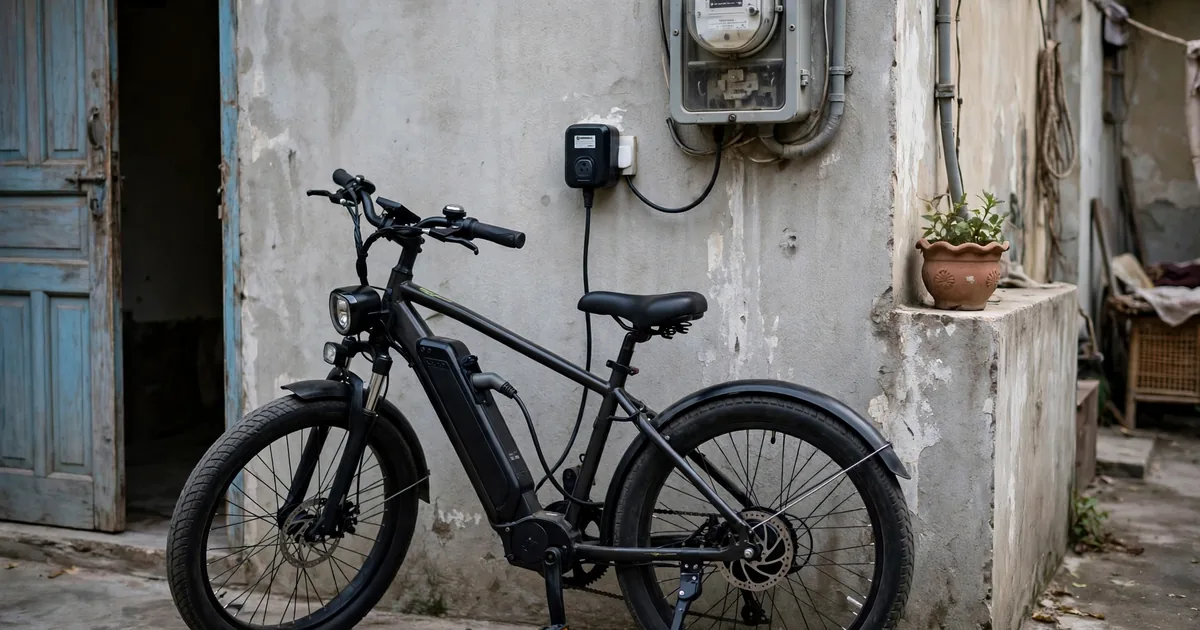
Working out your real e bike charging cost Pakistan wide takes five minutes and one electricity bill, yet most buyers never do it — they just hear “very cheap” and hope it is true. It usually is true, but the exact figure depends on three things you can check today: how big your battery is, how many units a full charge actually takes, and which tariff slab your household falls into. This guide shows the calculation step by step with example numbers, so you can produce your own exact cost per charge, per kilometre and per month.
Electricity tariffs in Pakistan are revised by the government and differ by distribution company and consumption slab. Every rate below is an example — always price your calculation from your own latest bill.
Step 1: Know Your Battery Size in Units
Electricity is sold in units, and one unit is one kilowatt-hour (kWh). Your battery’s size in units is easy to estimate from its label: multiply volts by amp-hours and divide by 1,000. A very common commuter e-bike battery of 72V and 20Ah holds about 1.44 units of energy (72 × 20 ÷ 1,000). A 60V 20Ah pack holds about 1.2 units; a larger 72V 32Ah pack holds about 2.3 units.
A full charge from empty takes slightly more than the battery’s capacity, because chargers are not perfectly efficient — a sensible planning figure is the battery size plus about 15–20 percent. So that common 72V 20Ah bike takes roughly 1.6–1.7 units from the wall for a complete charge. Almost nobody charges from fully empty every time, so your average charge will usually be smaller than this worst case.
Step 2: Find Your Real Per-Unit Rate
Pakistan’s domestic electricity tariff is slab-based: the more units a household consumes in a month, the higher the rate applied, and the final bill also carries taxes and surcharges. The only honest way to price your e-bike charging is to take last month’s bill, divide the total amount by the total units, and use that as your personal per-unit cost. For many households this all-in figure lands somewhere in an example range of roughly Rs 45–70 per unit; protected and low-consumption consumers pay less per unit, heavy consumers more. Tariff schedules are set under NEPRA, and your distribution company prints the slab table on or with your bill.
E Bike Charging Cost Pakistan: The Numbers Worked Out
| Battery (example) | Units per full charge | Cost @ Rs 50/unit | Cost @ Rs 65/unit | Typical range |
|---|---|---|---|---|
| 60V 20Ah (1.2 kWh) | ~1.4 units | ~Rs 70 | ~Rs 91 | 50–70 km |
| 72V 20Ah (1.44 kWh) | ~1.7 units | ~Rs 85 | ~Rs 110 | 60–80 km |
| 72V 32Ah (2.3 kWh) | ~2.7 units | ~Rs 135 | ~Rs 176 | 90–120 km |
Read the table the practical way: a typical student riding to campus on a 72V 20Ah bike spends roughly the price of a cup of tea to “fill the tank” — around Rs 85–110 for 60–80 km of riding at example rates. Per kilometre, that is roughly Rs 1.3–1.7, where a petrol bike commonly costs several times more in fuel alone. Students comparing total ownership costs can also see how a scheme bike’s installments look on the E Bike Scheme for Students page.
Your Monthly Charging Bill
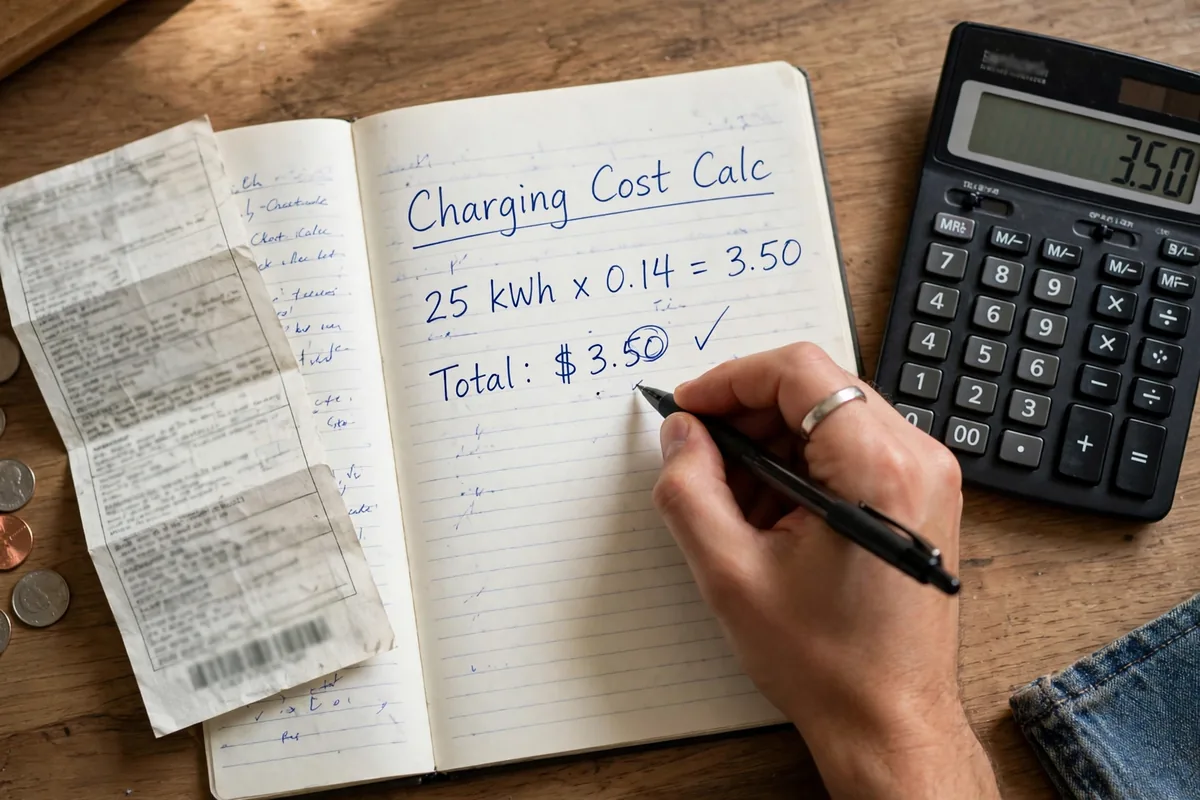
Multiply your cost per charge by how often you charge. A rider covering about 1,000 km a month on the middle example above charges roughly 13–15 times, using around 22–26 units if they mostly top up rather than fully emptying the battery, or up to about 35–45 units in heavier use. At example rates that is a monthly charging cost of roughly Rs 1,300–2,700 — the figure to compare with a petrol bill that is commonly two to three times higher for the same distance. Hostel students should note one local complication: some hostels and rented rooms sub-meter electricity at a flat per-unit rate set by the owner, which can be higher than the utility tariff. Ask the rate before you assume the cheap figure, and agree charging permission in advance.
Five Ways to Keep Charging Costs Down
- Watch your slab: if your household sits just below a slab boundary, heavy charging in the last days of the billing month costs the most. Spreading charges evenly keeps more units in the cheaper slab.
- Top up, don’t deep-drain: charging from half-full uses fewer units per session and is kinder to the battery, which protects your long-term cost as well.
- Charge on the standard charger: the charger supplied with the bike is matched to it; cheap mismatched chargers waste energy and can damage the pack.
- Use off-peak hours where your meter supports them: some meters offer cheaper night rates; if yours does, overnight charging saves money automatically.
- Unplug when full: a charger left connected for days draws small standby power and adds heat stress for no benefit.
None of these tricks is dramatic alone, but together they keep your running cost at the bottom of the example range — which matters if you are charging at home for a bike you use daily under a scheme like the PM E-Bike Scheme.
FAQs
How many units does one full e-bike charge take?
For the common 72V 20Ah commuter battery, about 1.6–1.7 units including charger losses. Smaller packs take around 1.4 units; large long-range packs can take about 2.7 units.
Will charging an e-bike noticeably increase my home bill?
A daily rider adds roughly 25–45 units a month. You will see it on the bill, but at example rates the increase is roughly Rs 1,300–2,700 — far below the petrol cost it replaces.
Is public charging cheaper or more expensive than home charging?
Public charging stations, where available, charge for convenience and are usually priced per unit above home tariffs. Home charging from your own meter is almost always the cheapest option.
Can I charge from a small home solar system or UPS?
A solar system sized for it can charge an e-bike during the day and cut costs further. A household UPS battery is generally a poor source — it drains the UPS and shortens its life. Ask an electrician before experimenting.
Does fast charging cost more in electricity?
The units consumed are about the same; the cost difference is battery wear. Frequent fast charging can shorten battery life, and the battery is the expensive part — so slow home charging is cheaper in the long run.
Conclusion
Your e bike charging cost in Pakistan comes down to a simple sum: battery units per charge, multiplied by your own bill’s per-unit rate, multiplied by your monthly charges. For most daily riders the answer lands between Rs 1,300 and Rs 2,700 a month at example tariffs — a fraction of petrol. Do the five-minute calculation with your real bill today, and you will know your true running cost before you spend a single rupee on the bike.